Maritana Minerals reports 41 m at 3.11 g/t gold at Crake near Kalgoorlie, three times the resource grade
An 8 m zone at 10.60 g/t holds about two-thirds of the hole's gold. The first drilling at Coote and Crake since 2022 feeds a resource update due by March 2027.
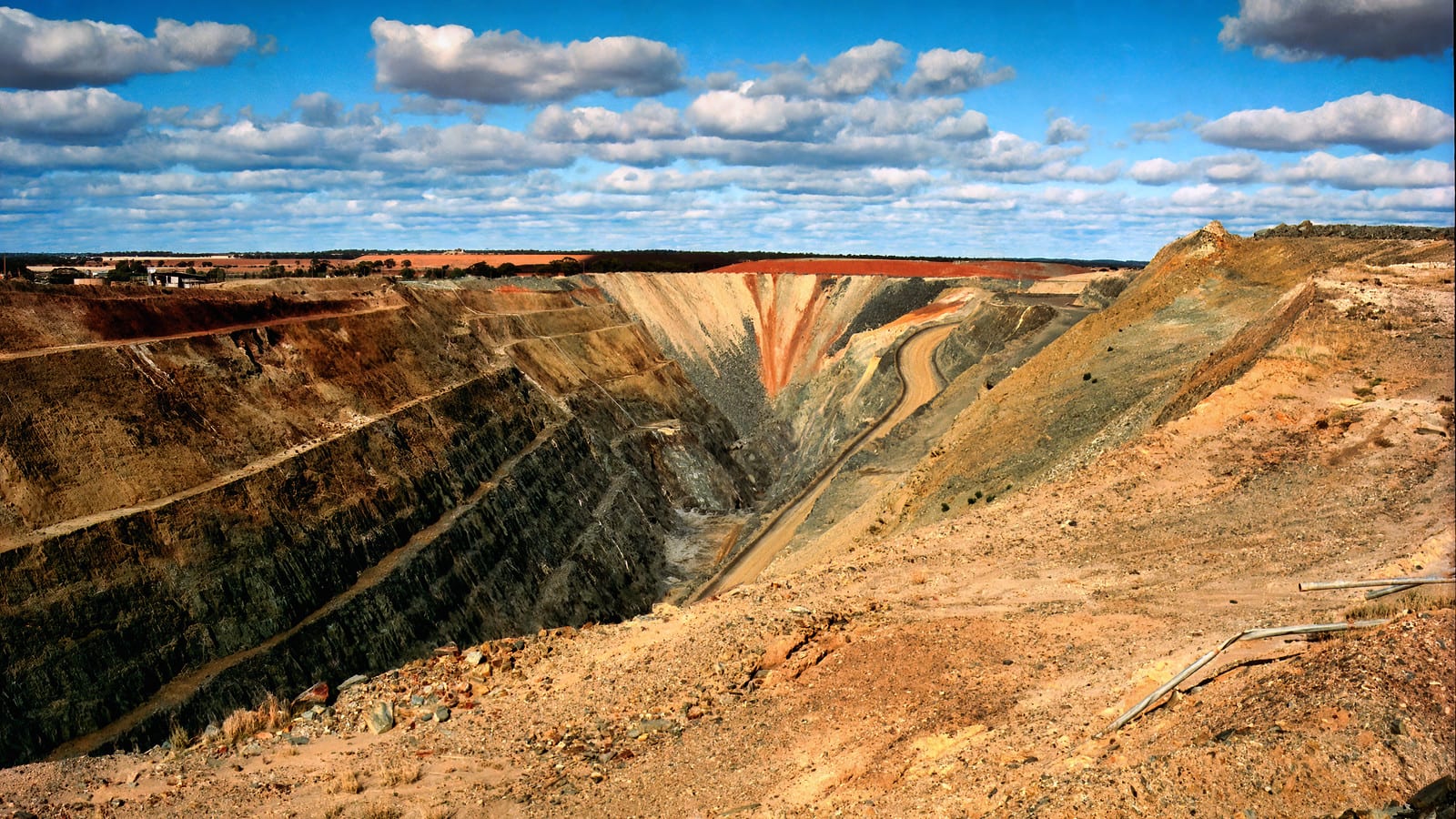
Maritana Minerals (ASX: MRT) has released the first assays from reverse circulation (RC) drilling at its Coote and Crake gold project, 8 km west of Kalgoorlie-Boulder in Western Australia. The announcement, lodged with the ASX on 25 November 2026, covers 67 holes: 33 at Crake, 19 at Coote and 15 to the north and between the two deposits.[1]
It is the first drilling at the project since 2022. Maritana counts Coote and Crake among the open-pit ore sources in its life-of-mine plan for the Black Swan processing hub, and the work is part of a roughly 60,000 m resource conversion campaign across several of its deposits. Neither deposit has been mined.[1]
The reported intercepts
| Hole | Deposit, purpose | From (m) | Length (m) | Au (g/t) |
|---|---|---|---|---|
| CCRRD260016 | Crake, extension | 130 | 41 | 3.11 |
| incl. | 163 | 8 | 10.60 | |
| CCRRD260015 | Crake, extension | 148 | 6 | 4.89 |
| CCRRD260019 | Crake, extension | 183 | 7 | 3.65 |
| CCRRD260013 | Crake, extension | 71 | 7 | 2.83 |
| CCRRD260055 | Crake, infill | 51 | 9 | 4.56 |
| CCRRD260063 | Crake, infill | 64 | 11 | 2.65 |
| CCRRD260005 | Crake, infill | 20 | 20 | 1.35 |
| CCRRD260014 | Crake, infill | 143 | 13 | 1.77 |
| CCRRD260049 | Coote, conversion | 50 | 4 | 3.34 |
| CCRRD260066 | Coote, conversion | 88 | 9 | 1.46 |
Downhole lengths calculated at a 0.5 g/t Au lower cut-off with up to 1 m of internal dilution (2 m in the broad CCRRD260016 interval), no top cut, grades rounded to two decimals. True widths are estimated by the company at about 80-90% of downhole lengths. Source: Maritana Minerals ASX announcement, 25 November 2026.
How the headline hole breaks down
The 41 m interval in CCRRD260016 equals about 127.5 gram-metres, the product of length and grade. The 8 m sub-interval at 10.60 g/t accounts for about 84.8 of those, or roughly 66%. The remaining 33 m therefore average about 1.3 g/t, close to the resource's average grade of 1.04 g/t. These are our calculations from the rounded figures in the announcement.[1]
So the hole shows both a broad zone of resource-grade gold and a thick high-grade core. Maritana says the higher grades occur where structures intersect and where pyrite, up to 3% by volume, and magnetite are more concentrated in the altered felsic porphyry that hosts the lodes. It describes the lodes as generally 3 m to 5 m thick, but stacked to as much as 50 m in places, possibly because of thrusting.[1]
With true widths estimated at 80% to 90% of downhole length, the 41 m interval would be about 33 m to 37 m true width, by our calculation. The company describes this as an estimate given the drilling orientation; true widths are not yet precisely known.[1]
“Importantly, a number of holes have intersected gold outside the previous interpretation, indicating that mineralisation potentially extends at depth and to the North at both deposits.”
Context: the existing resource
The combined Mineral Resource for Coote and Crake is 4.14 million tonnes at 1.04 g/t gold for 139,000 ounces, at a 0.5 g/t cut-off, last estimated in 2021 for Crake and 2025 for Coote. The two deposits sit about 450 m apart on a granted mining lease, with mineralisation reported over about 600 m of strike, and about 1 km north of Norton Goldfields' Janet Ivy operation.[1]
The extension holes, such as CCRRD260016, test ground outside the modelled lodes and could add tonnes if later holes confirm continuity. The infill holes test ground inside the existing model and are aimed at raising confidence in the resource classification. The announcement does not say how the results will change the tonnes, grade or categories of the estimate; that will only be known when the new estimate is published.[1]
What the results don't show
- Continuity between holes: the extension results are individual pierce points, and Maritana says outstanding assays and remaining holes are meant to firm up any extensions.
- Complete data: some holes have assays pending, and where 4 m composite samples were anomalous, re-assays of the 1 m samples are still pending.
- A mining outcome: the pit shells shown in the announcement are preliminary and will be reviewed in the reserve process.
- A change to the resource: the results are exploration results and are not part of a Mineral Resource until the update is completed.
Reporting basis
The results are reported under the JORC Code (2012). RC samples were analysed by SGS Laboratories using 50 g fire assay. The Competent Person for the exploration results is Stephen Guy, a Member of the Australian Institute of Geoscientists, who is Maritana's Chief Geologist, a full-time employee, and holds shares and options in the company, as the announcement states.[1]
What comes next
Maritana aims to finish the current resource definition drilling at Coote and Crake before Christmas 2026. It has begun reinterpreting the mineralisation wireframes and expects to complete a new resource estimate in the March quarter of 2027, followed by pit optimisation, design and scheduling work. Further drilling along strike to the north and down-dip may follow in 2027.[1]
Questions readers ask
- Is the gold zone in CCRRD260016 41 m thick?
- Not exactly. 41 m is the downhole length. Maritana estimates true widths at about 80% to 90% of downhole lengths, which would put this interval at about 33 m to 37 m by our calculation.[1]
- Does this increase the Coote and Crake resource?
- Not yet. The current resource of 139,000 oz stands until Maritana completes a new estimate, which it expects in the March quarter of 2027.[1]