Killi's first Lodestone core makes a 71% Fe magnetite concentrate, 600 m outside the resource
Davis Tube tests on two holes beat the resource's 33% mass recovery and 69% Fe. The 71% is a lab concentrate grade, not the grade of the rock.
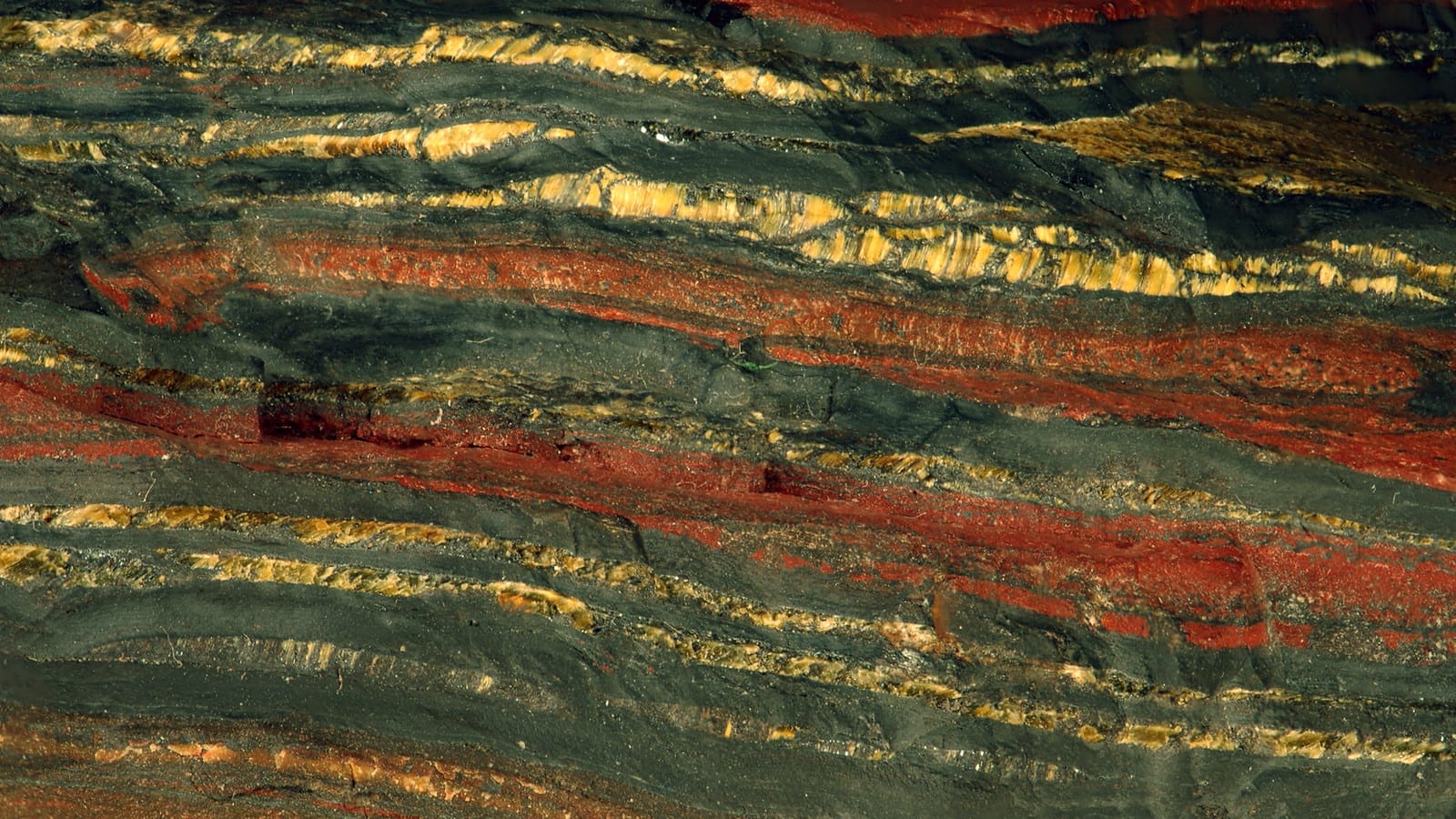
Killi Resources (ASX: KLI) has released the first test results from diamond drilling at the Lodestone iron ore project in Western Australia. The 25 November 2026 announcement reports Davis Tube Recovery results from the company's first two core holes, both collared outside the existing Mineral Resource.[1]
Lodestone is a magnetite deposit in a banded iron formation that the company describes as thermally recrystallised over a 25 km trend. Magnetite projects are judged less on the iron content of the rock than on two numbers: how much of the rock can be recovered as magnetic concentrate, and how pure that concentrate is. These results address both.[1]
The results against the resource
| Hole or estimate | Interval (m) | Length (m) | Mass recovery | Concentrate Fe | Concentrate SiO2 |
|---|---|---|---|---|---|
| KKDD001 (vertical) | 43.0-97.6 | 54.0 | 38.5 | 71.0 | 1.47 |
| KKDD004 (-60 degrees) | 112.6-164.0 | 51.4 | 43.1 | 71.0 | 1.40 |
| Inferred resource, 110 Mt | n/a | n/a | 33 | 69 | not restated |
Length-weighted averages of 4 m composites, DTR by ALS Metallurgy at -75 microns and 3,000 gauss. KKDD001 is oblique to the mineralisation, so downhole lengths exceed true thickness; for KKDD004 the company puts true thickness at generally more than 80% of downhole length. Resource figures from the company's 11 June 2026 estimate as restated in this announcement. Source: Killi Resources ASX announcement, 25 November 2026.
What the numbers mean
In a Davis Tube test, core is ground to a fine powder and passed through a magnetic field. The magnetic fraction is weighed, giving the mass recovery, and assayed, giving the concentrate grade. A 38.5% mass recovery means roughly 38.5 tonnes of concentrate per 100 tonnes of tested material; the rest would be waste. Higher recovery means less rock to mine and grind for each tonne of product.[1]
On both measures the two holes came in above the resource averages: mass recoveries of 38.5% and 43.1% against 33%, and concentrate grades of 71.0% against 69%. Impurities in the concentrate were low, with silica around 1.4% to 1.5% and phosphorus and sulphur at a few thousandths of a percent. Two holes cannot set a new average for a 110 Mt resource, but they suggest the material south of it is at least comparable.[1]
Not every composite was strong. In KKDD004, composites from 76 m to 88 m, in a hanging-wall zone, returned mass recoveries of only 6.1% to 13.8% and concentrate grades of 61.2% to 68.5% Fe. The top 43 m of KKDD001, which includes oxide material, has not been tested yet.[1]
“With an iron grade of 71% Fe, the concentrate from these first two holes is almost pure magnetite, with little or no impurities.”
Company claims versus what is shown
Killi says a concentrate like this would suit electric arc steelmaking and attract a significant price premium. That is the company's expectation. The announcement contains no pricing, cost or economic study, and its own next steps include pelletising tests and work aimed at a direct-reduction grade product, which have not yet been done.[1]
- Resource growth: the company expects multiple resource updates as drilling continues; the results reported here are exploration results and do not change the 110 Mt estimate.
- Quality control: the JORC table states that no company-inserted blanks, duplicates or external laboratory checks were used for these composites.
- Pending data: seven further core holes, KKDD002, KKDD003 and KKDD005 to KKDD009, are completed with results outstanding.
- Tenure: the exploration licence was granted to Yukon Resources Pty Ltd, and Killi has agreed to acquire the project, the announcement says.
Reporting basis
The results are reported under the JORC Code (2012). The Competent Person for the resource, geology and exploration results is Dr Stuart Owen, Principal Geologist at Matakitaki Minerals Pty Ltd and a Member of the Australian Institute of Geoscientists. The announcement states that he holds no securities in Killi and receives no incentive payment tied to the resource estimate.[1]
What comes next
The current phase includes a proposed 20,000 m of RC and diamond drilling over about 15 km of the trend, aimed at enlarging the resource and lifting its confidence category enough to support an economic study. Further metallurgical work will test different grind sizes and separation methods on fresh, transitional and oxide material.[1]
Questions readers ask
- Is Lodestone rock 71% iron?
- No. 71% Fe is the grade of the magnetic concentrate produced in the laboratory test. The rock itself contains much less iron, and only 38.5% to 43.1% of the tested material by weight reported to the concentrate.[1]
- Has the Lodestone resource increased?
- Not yet. It remains 110 Mt in the Inferred category. Killi expects resource updates over coming quarters as drilling results arrive.[1]