Patronus Resources reports 9 m at 2.4% copper in first-pass drilling at Hydrellison, Pine Creek NT
Eight holes cut copper along an 800 m trend from the old Mt Ellison workings, but no other intercept tops 1.1%, and the company says continuity is unproven.
Patronus Resources (ASX: PTN) has reported a best intercept of 9 m at 2.4% copper from 91 m in first-pass reverse circulation (RC) drilling at the Hydrellison prospect, part of its Pine Creek Project in the Northern Territory. The results were released to the ASX on 24 November 2026.[1]
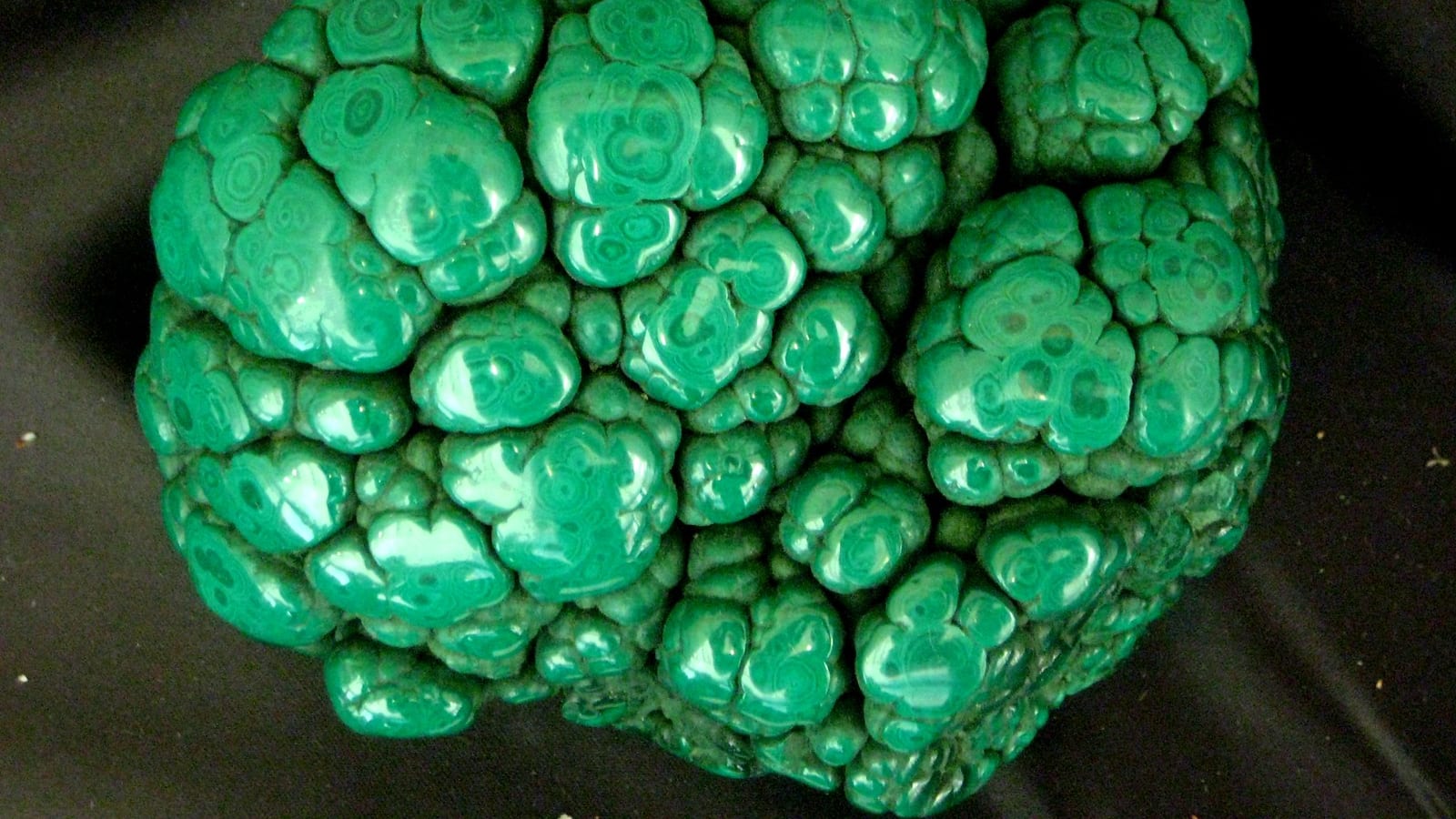
Hydrellison sits beside the historical Mt Ellison copper-bismuth workings, in the Burnside North area on the north-east side of the Burnside Granite. Malachite and azurite, the green and blue copper carbonates, are visible at surface around the old workings.[1]
The reported intercepts
| Hole | From (m) | Interval (m) | Cu (%) |
|---|---|---|---|
| ME26RC011 | 91 | 9 | 2.4 |
| incl. | 96 | 2 | 5.5 |
| ME26RC005 | 39 | 4 | 1.1 |
| ME26RC003 | 67 | 2 | 0.8 |
| ME26RC006 | 91 | 2 | 0.6 |
| HY26RC011 | 131 | 6 | 0.4 |
Copper intercepts at a 0.2% Cu cut-off with up to 3 m internal waste. Downhole widths; true widths generally not known. For ME26RC011 the company interprets a structure dipping about 45 degrees north-east and estimates a true width of about 6 m. Source: Patronus Resources ASX announcement, 24 November 2026, highlights and Table 1.
One strong hole on a long, thin trend
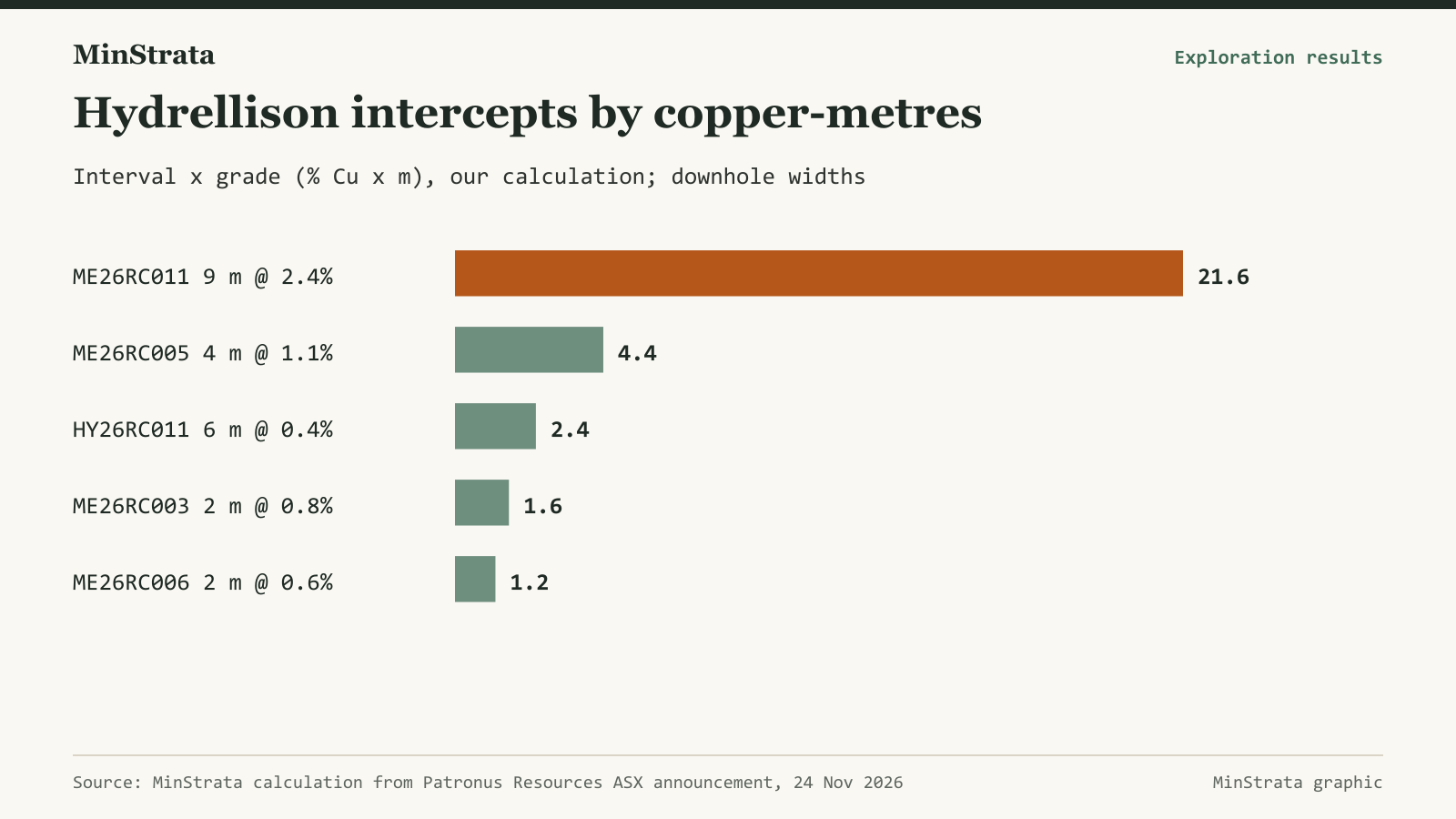
The release rests on ME26RC011. Its 9 m interval holds about 22 copper-metres (interval times grade), and the 2 m at 5.5% accounts for about half of that, on our calculation. The next best hole, ME26RC005, holds about 4.4 copper-metres.[1]
That spread is why the company's own cautionary statement matters. The 800 m trend joins eight wide-spaced pierce points, and Patronus says the drilling cannot yet show whether higher grades continue between them.[1]
The copper sits in pyrrhotite-bearing carbonaceous shales of the Koolpin Formation. Historical records suggest the old underground workings went about 20 m below surface, although their extent has not been verified.[1]
“Our work programs in this area will now focus on defining the controls on mineralisation and determining whether the higher-grade zones continue between holes.”
The company behind the result
Patronus explores for gold, base metals and uranium in Western Australia and the Northern Territory and reports a combined gold Mineral Resource of more than 1.2 Moz. Hydrellison has no resource.[1]
The announcement lists a market capitalisation of A$59 million and cash and liquid investments of A$72 million at 30 September 2026. Those figures come from different dates, but they show the company's market value was below its stated cash and investments.[1]
Reporting basis
The exploration results are reported under the JORC Code (2012). The Competent Person is Leah Moore, a member of the Australian Institute of Geoscientists and a full-time employee of Patronus, as the announcement states.[1]
What comes next
Patronus plans detailed mapping and structural work at Hydrellison to guide follow-up drilling in 2027. At Hydra, assays from the four follow-up holes, including a twin hole drilled to 208 m, will decide the next stage there.[1]
Questions readers ask
- Is the 800 m copper trend continuous?
- Not shown. It is an interpreted trend linking eight wide-spaced holes, and the company says continuity between them is not established.[1]
- How thick is the best copper zone?
- The 9 m interval is downhole. Patronus estimates its true width at about 6 m, based on a structure interpreted to dip about 45 degrees.[1]